
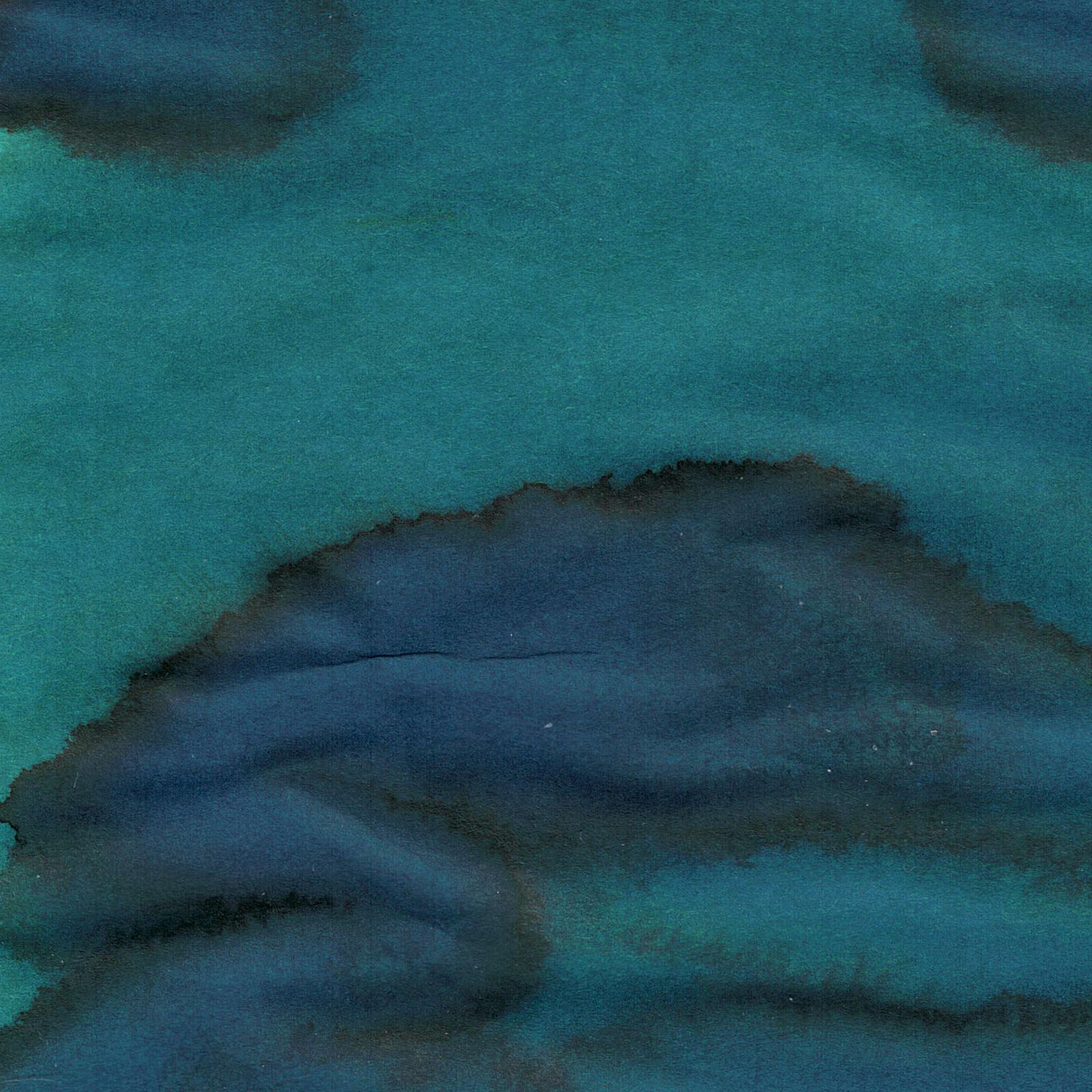
Switchman’s Cinque Terre Teal captures the Ligurian Sea in the instant a coastal train bursts out of a tunnel and into the light. It runs from the bright blue-green of open water to the deep, shadowed teal beneath the cliffs, where the sea meets the stone. We hope it will remind you that the dark stretches of any journey are part of the way through, and that the views on the other side were waiting all along. Every tunnel ends somewhere, and the view is worth every one.
Coastal Cliffs
A DOOR IN STONE
The name Cinque Terre means “Five Lands”: five villages—Monterosso al Mare, Vernazza, Corniglia, Manarola and Riomaggiore—strung along the cliffs of Liguria in northwestern Italy. First mentioned in documents of the 11th century, they lived for generations by terraced vines and olives, by fishing, and by whatever could be brought in by sea or mule track. In the 16th century they built defensive towers against Ottoman attacks; by the 17th, a long economic decline had set in.
The railway changed everything. The stretch between Sestri Levante and La Spezia was called “the most difficult section of the entire project”: builders hugged the twisting coast to keep the tunnels few and short, the winter of 1872 brought landslides that forced the route to change mid-construction, and materials had to be hauled in by sea where no road could reach. By the close of 1874 the line was open, and the five villages had, for the first time, a permanent link with the outside world. Its 44 km ran through 51 tunnels and across 23 bridges.
The train is still the way in. By road the villages can be reached only with great difficulty, and Corniglia, the one village not on the water, waits at the top of 383 steps above its station. The same door that let so many leave after the war has, since the 1970s, let the world come in—through long tunnels and sudden glimpses of the sea.